Step 1: pick a size by the mess, not the project name. The 10-yard bin holds roughly 4 pickup-truck loads and suits a single-room gut in a Woodstock bungalow or a garage cleanout in Montavilla. The 20-yard holds about…
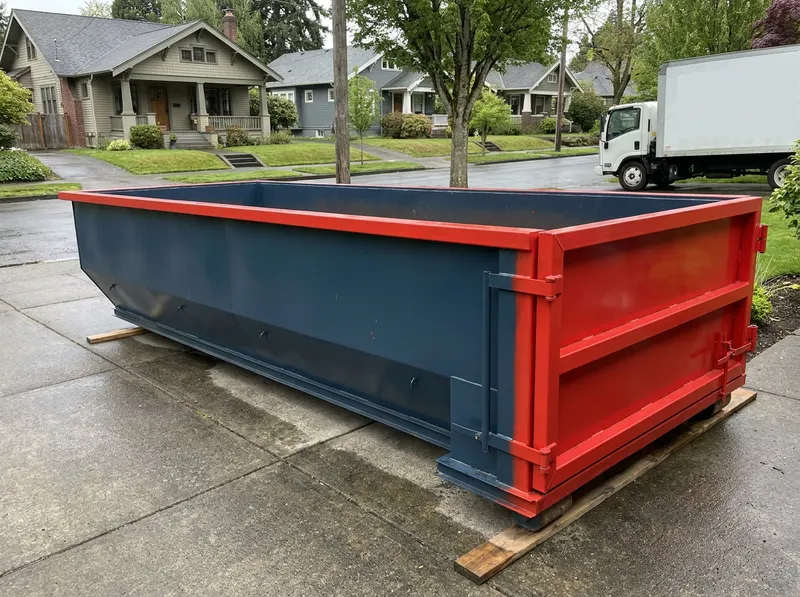
Step 1: pick a size by the mess, not the project name. The 10-yard bin holds roughly 4 pickup-truck loads and suits a single-room gut in a Woodstock bungalow or a garage cleanout in Montavilla. The 20-yard holds about 8 loads and fits a kitchen-and-bath remodel in Irvington.
The 30-yard and 40-yard carry a whole-house estate cleanout or a roof tear-off on a two-story Laurelhurst craftsman. The trade-off is driveway footprint versus debris volume, a 40-yard needs about 22 feet of clear length, while a 10-yard tucks into the tight driveways common on the older lots around Sellwood-Moreland and Hawthorne.
Step 2: plan the placement. On most residential streets a bin set fully on your own driveway or pad needs no permit.
If the only spot is the public street or a parking lane, common on the narrow blocks of St. Johns and the Alberta Arts District, the City of Portland requires a temporary street-use permit from PBOT, and the crew can advise on what that involves. A sheet of plywood under the wheels protects pavers and the soft asphalt aprons seen in older Multnomah Village driveways.
Step 3: load heavy items low and flat.
Weight drives real cost in this trade, which is why flat all-in pricing matters: the $595 to $895 numbers already cover disposal, so a load of wet drywall or a demolished Hollywood patio does not trigger a surprise tonnage line. Concrete, brick, and dirt are heavy, a dedicated clean-fill bin keeps those loads legal and manageable, and separating them helps regional recovery since Oregon diverts a large share of construction debris through Oregon DEQ materials management programs.
What cannot go in the bin matters as much as what can. Paint, solvents, motor oil, car batteries, and electronics are household hazardous waste and are banned from the dumpster; Metro hazardous waste facilities take those items instead.
Refrigerators and freezers hold refrigerant that must be removed before disposal under the EPA Section 608 rule, and tires, mattresses, and compressed cylinders are also kept out. For a DIY remodel, basic OSHA 1926 construction safety practices, gloves, eye protection, no overloading, keep a driveway job uneventful. Reusable cabinets, doors, and fixtures often find a second home through Earth911 recycling search or a local reuse outlet, and curbside recyclables still follow Portland curbside recycling rules.
Decision guidance: if the job is one room or a quick garage purge, the 10 or 15-yard is the right call; if it is a full remodel with cabinets and flooring, step up to the 20-yard; if it is a roof, a deck demo, or an estate clear-out, the 30 or 40-yard avoids a second haul.
A yard-waste or storm-cleanup project full of branches and sod from Woodstock or Laurelhurst still fits a standard bin, and green-waste alternatives are listed by EPA home composting guidance.
Every job gets a firm, written price after an on-site visit.
Tell us about your residential dumpster rental job in Portland and we'll send a clear, written quote, usually the same day.
 Top Shelf Dumpster Rental